by S.C. (Peter) Smith
Preface
On the occasion of our daughter’s wedding, which took. place in Wolfville, Nova Scotia on September 25, 1993, my father handed me an envelop containing a letter. The letter comprised fifty-four photocopied pages of handwritten text. At the time, Dad’s verbal explanation was as brief as his note on the envelop.
For Peter,
Notes re my father -written
in response to my sister Marion ‘s
request. Copy mailed to her
Aug 31/93
S.C.S.
My wife. Bonnie. and I did not read the letter until we returned home to Saint John’s after the wedding. At the request of his sister. ~on. he had recently composed and sent to her a journal of his childhood memories which she might use to draw some perception of their father. William Donald Fraser Smith. with whom she was barely acquainted. Their father passed away in 1923. in the prime of his life. leaving his wife, Maud, with ten children the youngest of whom was an eighteen-mouth old baby girl. Marion Levina.
Of course, neither I nor my brother, David, nor any of our Smith-clan cousins were born until many years after 1923. So none of us met our grandfather, William Donald Fraser Smith, and very few know much about him. Some of our Nova Scotian cousins probably knew our grandmother, Maud Barkhouse Smith, reasonably well But. being born and bred in Ontario, David and I only had opportunity to see her when our parent’s vacationed in Nova Scotia. Consequently, my memories of her are limited as. I suspect. are those of many of our cousins. Because of this it seemed appropriate to reproduce Dad’s letter for our benefit. our children’s benefit. their children’s benefit. etc.
It has taken me five years to reproduce the letter in this form. In so doing, I left Dad’s text unchanged except for very minor editing, some of which appears in square brackets […]. I added two family trees which researched and prepared and which were not part of his letter to Aunt Marion. As well, for the record, I added some photographs and illustrations of his and of my own, and some footnotes to complement his recollections. Each footnote offers a further explanation as I see it, or an interpretation as reported in the book Old Timers, a history of Canning and Habitant compiled in 1980 by A. Marie Bickerton.
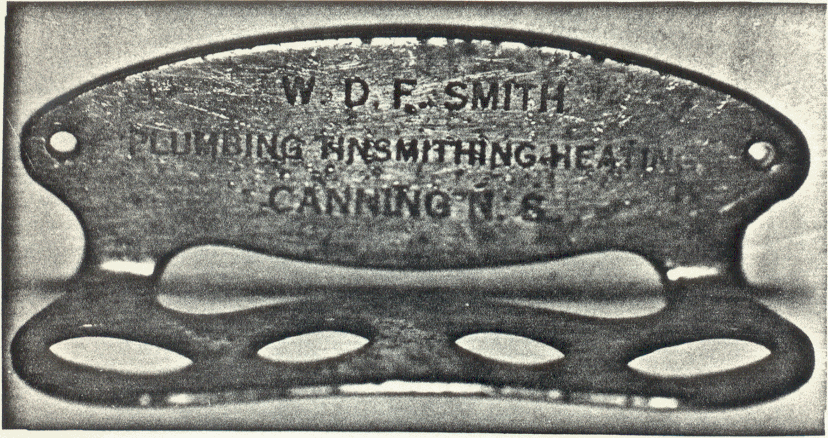
The cover photo is a tooth brush holder that Dad passed to me. Probably it was given as a gift to clients and customers.
Respectfully,
Peter Nisbet Smith
November, 1998.
To my sister, Mrs. Kenneth Keller
nee: Marion Levina Smith
Dear Marion,
You have asked me, on several occasions, to pass on to you my recollections of our father. Since you were only about a year and a half old at the time of his death I can fully appreciate the request. But keep in mind I was only 16 at the time and not yet dry behind the ears, coupled with that is the fact that it is now 70 years since his death, and that is a long time in any body’s language, especially me whose memory never was good.
However I’ll give it a try.
To begin, a brief summary of the Smith clan. Your great-grandfather, David Duncan Smith was born in Montrose, Scotland, on or about 1830. He married George Ann Johnston, also of Scotland. They came to Halifax (I don’t know when) with their two sons, William Donald Fraser (your grandfather) and William.
David Duncan was a cabinet-maker by trade, and according to Aunt Tillie, he was a good one.[1] I know little else about him. Nor do I know the year of his death. I understand he is buried in Camp Hill Cemetery in Halifax.
About this cemetery – I went there a couple of times and was able to locate the graves of a number of the clan. However things are not clear and – as Aunt Tillie said, there just wasn’t the money to buy headstones for everyone and in some instances the bodies were interred one above the other. Aunt Tillie had a small footstone placed on her father’s (your grandfather’s) grave [Figure 1].
Now about David Duncan’s two sons; first, William Donald Fraser (your grandfather). I am told that he was a newspaper artist, that in his day, before cameras, he attended court and made sketches of the prisoners, etc. Aunt Tillie said he was a good artist – at the time of his death she remembers there were several of his sketch books in the house and she thought that Aunt Theresa’s husband, George Melvin got them (or took them).
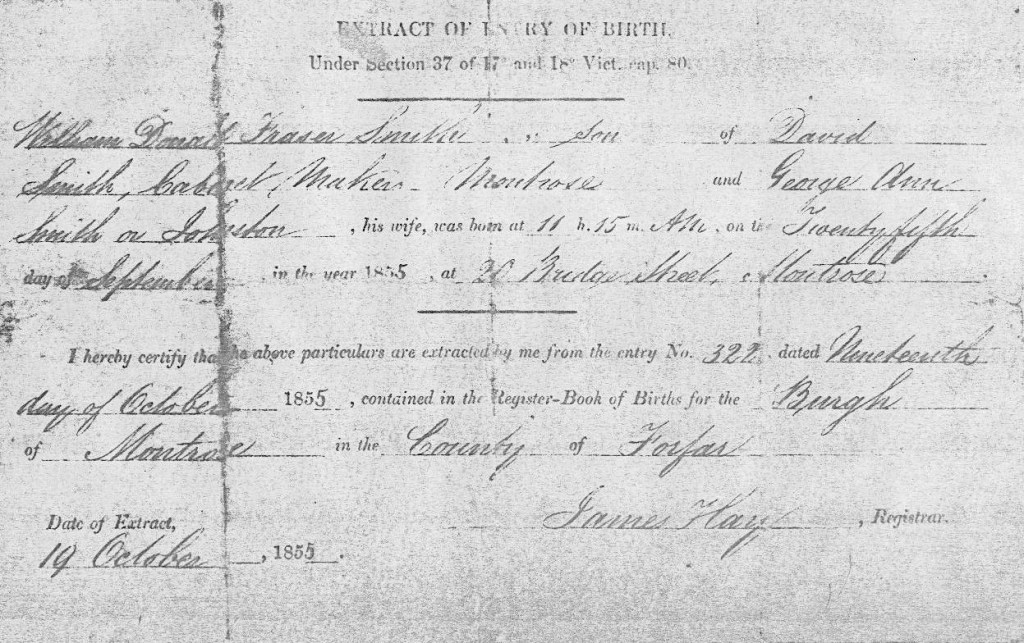
A few years back, Florrie and I took Aunt Tillie out to Aunt Theresa’s (then a widow, living with her daughter in Herring Cove) hoping to get some information. I took my tape-recorder with me, and I still have the tape, but it is not much, and I came away none the wiser. So much for your grandfather, born in 1855[2], died in Halifax in 1892, buried in Camp Hill Cemetery (37 years of age).
He married Theresa Julia Hume (I have a photocopy of the marriage certificate). There were eight children by this marriage:
1. George Ann Jane (1877). She died, I think, in 1886 – burned to death. That’s all I know.
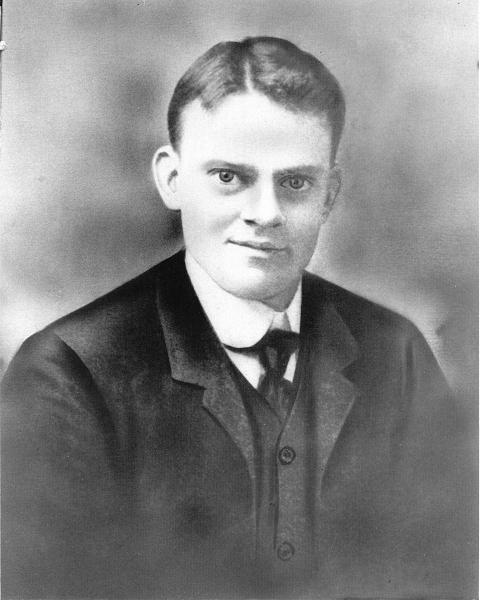
2. William Donald Fraser – your father [figure 3]. He was only 13 years old when his father died.
3. William MacDonald. No info at all.[3]
4. Percy Valentine – I got to know Uncle Percy a bit when I was transferred to the Bank in Halifax. I recall one Sunday he invited me to go for a walk – we ended up in a speak-easy on Water Street where he quenched his thirst, I didn’t. Uncle Percy was a small, slight person, a bit of a dandy. He worked in a butcher shop. He died in his early fifties [and is buried in Camp Hill Cemetery]. [figure 1A].
5. Theresa Eunice – She married George Melvin, why I don’t know. He wasn’t much good. She was a fine person.
6. Edith Martha – Can’t say much about Aunt Martha. I think she is the one that lived in Gaspereau (back of Wolfville). I remember visiting there a couple of times with our parents. It was a cottage quite close to the Gaspereau River. Seems she had a lady living with her.
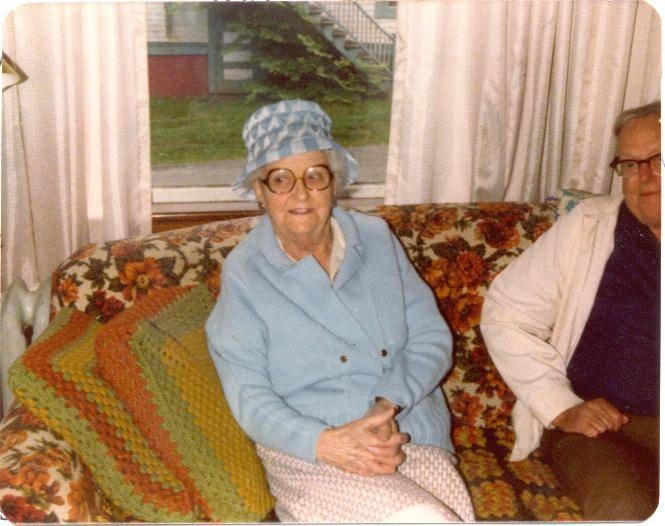
7. Mary Matilda – She was around three years old when her father died. You likely knew her, Aunt Tillie we called her. A fine looking woman and she had all her marbles [figure 4]. When her husband died (Bob Wallace) she continued and ran the hardware business for several years. She died only a few years ago, must have been in her nineties.
8. Ernest Laurier – Apparently lived only a few months.
Grandfather Smith’s wife was only 35 when she was widowed. She later re-married to James Mitchell. I got to know them quite well when I got sent to Halifax by the Bank. He wasn’t a bad egg, he was partially crippled – a bad back. I think he worked as a stevedore or warehouse helper. I can still picture him sitting in the rocking chair in the kitchen at 51 Maynard Street. And grandmother was all right, a no-nonsense type. There was one child by this marriage – Hilda – a rather plump lass. She married Bill Jollimore who worked for the telephone company – a nice man. I asked Aunt Tillie once why Grandmother Smith re-married and she said, “Seldon, we had to have food on the table.” – Right.
Grandfather Smith died in 1892 (aged 37) and Grandmother died in 1934 (aged 77). Both are buried in Camp Hill Cemetery.
William Smith – second son of David Duncan Smith, was born in Montrose, Scotland. No other info. Although Bob ([our] brother) told me back in 1965 (on tape) that his father having no sense in book-keeping and money that William handled all the financial matters. One morning when the old man came downstairs William wasn’t anywhere to be found. Not only was he gone, the money on hand was gone too. And that’s the last they ever heard of him.
A good story if true.
We now come to your father. He was born in Halifax in 1879, died in Canning in 1923, aged 43. He was 13 when his father died. What schooling he had I know not. He was apprenticed to (I think) Wm Stairs, Son & Morrow, of Halifax. If he followed usual practice he would be 14 – his apprenticeship would be for 7 years when he would earn his journeyman’s license. That would bring him to 21 and that would be about the time he hit for Canning. Keep in mind our Mother, who was a seamstress with Clayton & Sons, boarded at Grandmother Mitchell’s (51 Maynard St.). My records show they were married in 1900 – if so, Dad would have been 21 and Mother 19. So it looks as though they first set-up housekeeping in Canning.
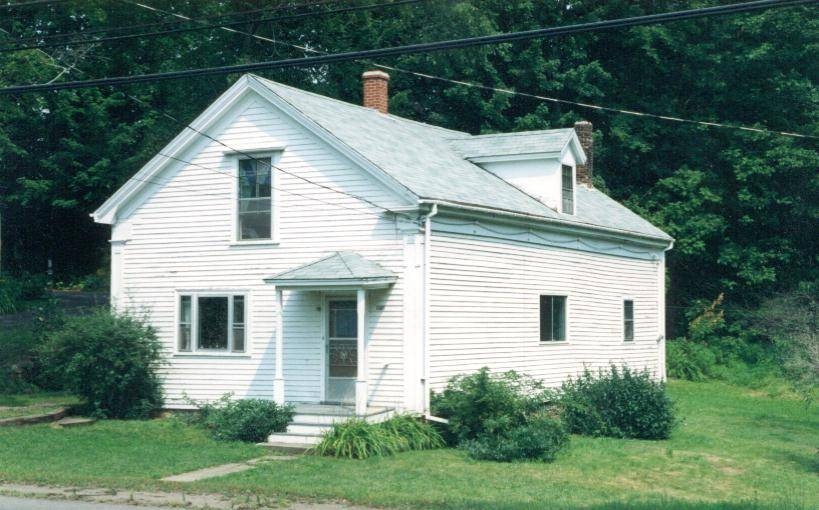
As far as I know the first house they lived in, in Canning, was the little house across from Oscar Roger’s – next to Starr Eaton’s[4] on one side [east side] and next to the larger house on the other [west side], this is the one they moved to later.
The little house (as I call it) is still standing and in good condition [figure 5]. The verandah that once extended across the front and part of one side is gone. My recollections of the place in my day are only fair – I think there were two front rooms, one of which Dad used for his roll-top desk and office. I used to go in there occasionally – books and catalogues, etc. And Dad was his own secretary and bookkeeper. I still can picture his statements or invoices, in pen and ink, each item detailed. He was good with figures and a pretty good writer.
And one time, on my birthday, I stood in the other front room, a dismal day, snowing lightly, and me waiting for whatever was supposed to make one’s birthday something to remember. How old? Pre-school.
The dining room had one of those lamps suspended from the ceiling, a sort of big half-moon globe and crystal drops on it [figure 6]. That’s where we studied our lessons. One of our jobs was to clean that and other lamp shades – the place was a bit drafty and the flickering flame would cause the shade to blacken and perhaps too because we were inclined to turn the wick up pretty high so we could see to read our school books.
Now for the kitchen – it ran across the back of the house – the big cook stove at one end and the sink at the other and a table in between. One day when Dad came home at noon for dinner he brought a fresh-caught eel – somebody told him they tasted better than chicken. So, Mother cut the thing up into pieces and put them in the frying pan. I don’t think anyone was licking his chop in anticipation. They had been cooking (frying) for some time and Dad had to get back to work. It was decided they were cooked enough, they were both standing at the stove looking into the frying pan when one of the pieces of the eel sort of squirmed – that did it, Dad picked up the frying pan, walked over to the waste pail under the sink and dumped everything in. No more eels.
How long we lived in the small house I cannot say. As a guess I’d say for 13 years (from 1901 to 1913) which means five of us kids were born there, Theresa being the last. I would have been 6 years old at the time which seems about right.
When we moved to the house next door it was like moving into a castle [figure 7 and figure 8]. It was some house, and still is, one of the most attractive houses on the street and still kept in excellent condition. The former owner was, I think, R. D. G. Harris, why he sold the place, whether he died or what will remain lost in the past.[5] I know he has a daughter, Helen[6], about [our brother] Bob’s age, or maybe older, they used to play together.
I don’t have to describe that house to you. It was a fairly large place although built on a shallow lot – rather close to the street and not much space at the back which abutted Joe Northrup’s orchard. The verandah ran along the front and one end. Lots of gingerbread. Inside two large front rooms with sliding doors between – a fair-sized den, a large kitchen-dining area, it ran across the back. A small pantry. A glassed-in sun porch. The front entrance was at the driveway side of the house. The thing that really dazzled me was that there was a fire-grate in every downstairs room. The sun porch was used for the laundry, at least that’s where the Beatty washer was – it was something, the latest in automatic equipment – it operated by connecting a hose to the water faucet which operated the gears that made the thing like a cow-stool rotate back and forth and thus swirled the clothes around.
I can [not] recall much about the upstairs. I know I slept in the “Ell”; the part of the house that was built on the main portion. What I recall about that most was the time we had an infestation of bed bugs. Our mattress was merely a big sack of cotton stuff with straw. Great when first filled but only so-so as it got packed down. The usual treatment then for bed bugs was a good dowsing of kerosene oil. Dad’s approach was more direct, the mattress and the bed were taken out to the yard and set on fire.
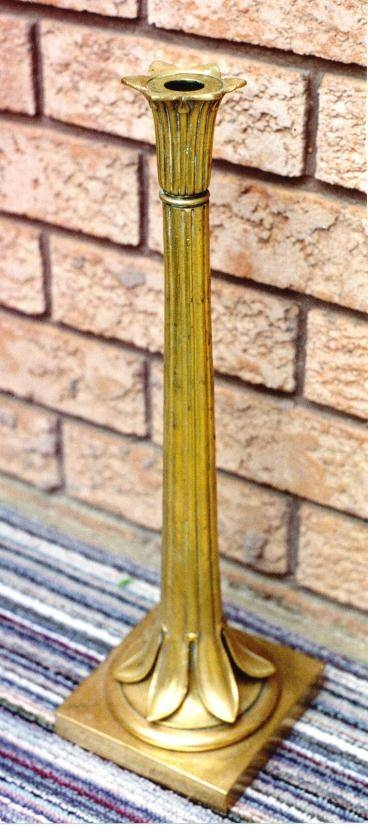
I guess it would be shortly after we moved to the house that Dad decided to buy a car and so he built a garage. Space was at a premium, where he did build it entailed some digging and the story is that that is where he dug up the bronze candle stand. It is about 18″ tall on a square base about 8″ square. It is thought that at one time it stood on a lower banister (or stair) post. I have that [figure 9].
That house holds a lot of memories for me. I still remember the time a rat bit you on the cheek while you were in your crib. They like choice morsels. I don’t think there was a house on Main Street that didn’t have rats to contend with. I think I’d be 13 or 14 when I went into the trapping business. Muskrat pelts brought a good dollar. I bought two “jaw traps” and sometime in October I would get up before breakfast and head up the little river to tend my two traps always having to get back home in time to go to school. I never got one muskrat. A bit later when only Arch and I were home, Mother kept saying there was a rat in the pantry. Finally to put her mind at ease we decided to bring one of my traps into the picture. So after supper one night we set the trap and placed it on a lower shelf, baited it with bread and molasses and fastened the attached chain (about two feet long) to the inside door knob. We closed the pantry door and went to bed. Sometime in the early morning hours all hell broke loose, Arch and I got up and went down stairs – neither of us would go alone. It didn’t take long to determine the cause of the racket.
We opened the pantry door (very slowly) and there was a rat, a good-sized one, struggling at the end of the chain, swinging back and forth and screeching his head off. What to do? Well, we did the only thing we could do, we got the poker from beside the kitchen stove, it was merely a piece of iron about 3 feet long and maybe 1/2″ or so square. It was awful at first, we took turns, and I guess we were so scared of getting bitten that we missed more than we hit. Finally we figured he was dead. I don’t know what we did with the dead rat or what happened to the trap. And if Mother wasn’t proud of her sons she darn sure should have been.
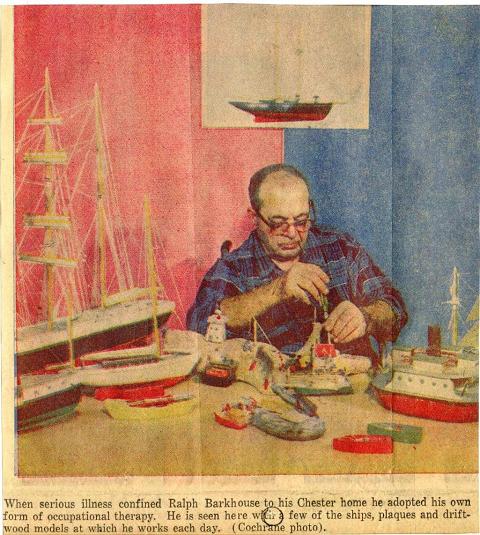
Every fall Dad used to get Uncle Ralph [our mother’s brother, figure 10] (Chester) to ship us a 1/2 barrel of salt-herring and a 1/2 barrel of sauerkraut. The sauerkraut was fine; we even used to eat it raw but the salt-herring. Seems every Friday noon (dinner) we had salt-herring and boiled potatoes. I think they were 98% bones.
And one job I really hated. Dad would order cord-wood in 4 foot lengths, most of [it] good-sized, which we had to cut in 1 foot lengths and split for the kitchen stove. A buck-saw was useless – we used a cross-cut. That was a chore we never seemed to finish.
Enough nonsense – I better move along.
Dad set up a business in Canning in the Covert Block[7], in later years what was Lloyd Ward’s clothing store. It was the unit nearest the monument. I have a picture taken of the interior, it shows Dad, Uncle Ralph, Bill Byers, Fred Jodrie – and don’t go away – me. It shows the work-bench and some equipment. I look to be maybe 4 years old – which would date the picture 1911. Dad must have been doing a pretty good business to have all that help. And I’d bet the photo was taken by Herb Blois, he called himself a traveling photographer. Herb was inclined to take a drink.
If, as I figure it he set up business in Canning in 1901 or 1902 he would have been only 21 or 22 years old (Don was born in Canning in 1902). It took money to buy equipment, pay rent, furnish a house. One wonders how he did it. But he managed somehow.
How long he stayed in the Covert Block I don’t know. He moved up a large building adjoining the Brick Block[8]. I know he was there at the start of the First World War (1914) because Fred Jodrie and pals stole (or took) Dad’s Ford touring car from the basement level intending to go to Kingsport (where hundreds of others went). But things went awry – there was a deep rut in the road just down the Main Street a ways and Fred went into it and the car would go no further.
You may remember the building – it was later Thompson’s Garage, next to it (up the street) was another large building where the bank used to be.
These larger premises made it possible to display stoves, etc. in the front part and a large workshop at the back. The basement was on a level with the government wharf directly behind and a roadway of sorts ran down behind the stores on the Main Street.
As an aside I should mention that Sir Frederick Borden in his day used his influence as a Minister of the [Federal] Government to see that Canning was looked after. He was responsible for the railway spur that cut-off from the main line at Hillaton and came along behind Sir Frederick’s across a big (!) trestle back of Oscar Roger’s to the wharf. It was a well-conceived undertaking, it meant that apples and potatoes could be moved to Canning and then aboard ships to foreign ports. Alas, and alas, the trestle was condemned as unsafe even before the first train crossed it. As part of the undertaking they built a freight shed on the wharf directly behind Dad’s shop.[9] It was used some when the steamship, the Brunswick, made it’s weekly trip. It called at Parrsboro, Wolfville, Kingsport and Canning.
While on the subject I may as well tell what happened to that building. It sits on Main Street today, next to Sarsfield’s Meat Market. For some time Tom Wood operated his ice-cream parlour and a bakery there. Later Laurie Manuel ran a restaurant there. And your Dad was the one to put it there. He bought the building, had it moved by rollers and winches, etc. to a new foundation. I watched them doing that – they had to move it off the wharf, make a right-angle turn, then move it along the narrow dirt road (maybe a 100′ or so) then jack it up to street level.[10]
No doubt about it your father was a very capable man, undoubtedly a first-class plumber and tinsmith. And I would think that in those days he would be regarded as the town engineer. He attended to the water system, flushed the hydrants, etc. The town water supply then (and I suppose now) was piped from the reservoir near the top of the North Mountain. And that reminds me of the time they had a public meeting in Parker’s Hall (above Parker’s Harness Shop). The purpose of the meeting was to hear the presentation of an official of Trask Well Drilling Company of Truro. I remember Bob North the Town Clerk sat at the head table with several others I don’t now know. Dad sat down in the audience. This Trask fellow gave a good pitch, he said if they drilled a well close to the reservoir they could get more water. Nobody asked Dad’s opinion. I’m a bit hazy here but I think that near the end of the meeting he did get up and ask the Trask fellow if he ever heard of getting water out of the side of a mountain. He got no rely. You ask how I know about all this? Well, I was there, as were several other kids. And you ask did they drill the well? Yes. Did they get water? No! [11]
Time moves on. Early in February of 1923 there was a bad leak in the water main, it was a very cold spell. As a result Dad came down with pneumonia (actually his second such). There being no drugs or antibiotics in those days it was a case of letting nature run its course. I was the night operator at the telephone office at that time, my hours 10:00 pm to 8:00 am. And it was just before 8:00 on Feb. 23, 1923 when Mother phoned me at the telephone office to say Dad had died – and only 43 years of age.
Looking back I simply cannot figure how Mother [figure 11] ever made it, left a young woman with ten kids. I say kids. In age up the scale from 11/2 to 21.
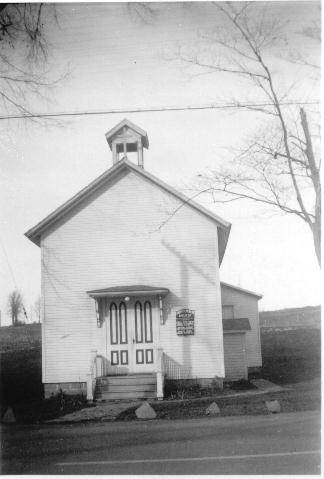
The Masonic Lodge was a great help. They brought Mother some money to tide her over – they made the funeral arrangements. The funeral was held on a bitterly cold day from the little church in Canning [figure 12].[12] Both Mother and Dad were devoted church workers. The church was heated by a single pot-bellied stove just inside the front door. Dad apparently saw to it that the fire was lighted long before time for the church service – 3:00 pm. One time Bob and I were delegated to do his job. After we got the fire going Bob went home and I had to stay and watch the fire until someone came. I got bored and started roaming about, found myself in the vestry and then found the little cupboard where the minister kept his gown – and – down on the floor beside it a bottle of wine. It had a silver swastika cross on the head of the corkscrew in the bottle. I would be 12 or so at the time. Anyway I couldn’t resist taking a couple of swigs of that wine. Then I went out and stood in the pulpit and preached what must be the most unheralded of all sermons.
To get back on track. I know the church was packed and then some. Of course it was a very small church. I remember they sang Dad’s favourite hymn – “We Shall Gather on the River” – that’s not the correct title but I know the tune.[13]
The trip to Church Street [Chapel Street?] for the interment was bone chilling. When it was all over and we [were] back in our home it sure was a much different place. Then the family split to some degree, Uncle Ralph took Archie back with him to Chester. He was there awhile and I guess he drove them up the wall. Arch has told me some of his capers. I guess we all reacted in our own fashion.
Upon reflection I would say that Mother was the mortar that held the bricks together. Do not misunderstand me it evidently was a good marriage, they got along together very well but when I think of Mother with a continual new birth – a house to look after, cooking, laundry, cleaning, and a parcel of kids to look after she must [not] have been very far from worn out. Yet, she had spirit. I seldom heard her shout.
And they brought ten children into this world, all of them by Doctor Miller, all of them born at home. Think about that. None of those children became Prime Minister nor did any of them go to jail.
For the record I list the offspring [figure 13]:
Donald Fraser (1902-1965)
Born in Canning [figure 14]. Took over the business on his father’s death. The responsibility was apparently too much. He married Vera Munroe, a school teacher in Canning and they lived for a short time with Mother. They had children, I think four – one for a time was editor of the Halifax Chronicle and Herald, another was a lawyer (Lindon). He practiced in Wolfville for awhile. And a daughter, I met her at her father’s funeral.
Don was a smart man, very capable, a wizard of a mechanic but he could not seem to manage money. Nor could he stay away from the booze.
He enlisted in the air force and was in the maintenance section, stationed in Dartmouth. After the war he lived in Shubenacade for awhile and while there he was killed by a car while walking on the highway at night (1965).
His wife Vera died in hospital in Sarasota, Florida in her 80th year. She was born in Scots Bay in 1902. Her obituary notice in the Halifax paper fills about 12″ of a column and says she was one of Nova Scotia’s best known poets.
Both are buried in Church Street [Chapel Street?].
Robert Chester (1904-1986)
Born in Canning, October 1904. Died in Lunenburg, July 1986. Bob left home for Waltham, Mass., not long after his father died. He worked at the Waltham Watch Works. While there he married Viola Webb a native of Kingsport, N.S. He came back to Canning some years later and set-up a repair business. He built a house up above the Lady Borden estate. Later Ted Slack built next to him.
Later he went to work for Himmelman’s Jewelry in Lunenburg. On the death of the owner he bought out the business which included the premises, a three-storey building on the Main Street. Viola was very active in the store. Between them they built up a successful business. Bob was plagued with a heart condition. They built a house in Lunenburg which they later sold and then bought a place on Townson Street – rented the upper level.[14]
Bob’s legs gave out and he was too heavy for Viola to handle so he had to go into a rest home in Lunenburg. He was not happy there and I can understand that. He had previously sold the business to his son Bobby.
Bob died in hospital on July 3, 1986. His son Bobby could not attend the funeral because just shortly before he suffered a severe stroke. Bob was named after Mother’s father, Robert, and Chester, the town. [There is a daughter, Elaine.]
Seldon Clare (1907-2000)
Born in Canning, February 4, 1907. I was named it is said after a Church of England bishop – appropriate? Entered Acadia University in September 1923 the same year as my father died – I was 16. Spent only one year (Engineering), then quit, no money. I have to recite a little story here. When I came home from Acadia that year I got a job with Sam Chipman. I still owed $100 to Acadia. I tried everywhere for money. In desperation I decided to try Bill Burbidge – a money lender but a miserly, crusty man. I went to his house one evening. He ushered me in and came right to the point, “What do you want?” he asked. I told him my problem, told him I had a job and would repay the loan ($100) by early Fall. He didn’t say a word, he just opened his desk drawer, pulled out a promissory note, filled it in and said, “Sign this.” I did and he passed over the $100. Well, I had a pretty good summer, not all work, but I managed finally to save $100. So, one evening I again go to see Mr. Burbidge. I handed him the money. He reached into the desk and pulled out the promissory note and proceeded to tear it to pieces. Then he handed me back the $100. “Now, listen carefully young man, if you mention this to anyone I’ll lay my hands on you.” So what? You can’t judge a book by its cover – that little incident has had a life-long impression on me.
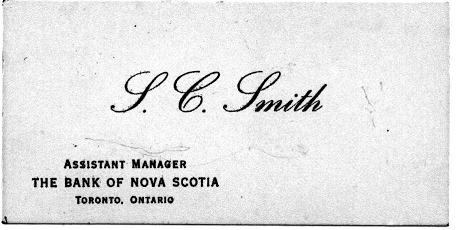
I could go on talking about myself – but I will forebear. I entered the Bank Jan. 16, 1925, was transferred to Halifax in 1929 and later that year to Toronto. I served in several branches, my last, the main branch where I reached the position of Assistant Manager [figure 15]. A month later I resigned to take on a position with Garfield Weston as General Manager of a half-assed mining venture he had got hooked into – and that’s a story in itself. A year later the mine was closed and I went into the Executive Office of George Weston Limited (1943) where I never did get to be president but they kept me on until I was pensioned at my own request in 1969 (62 years old). They have been paying me a pension ever since (24 years). So I have no complaints.[15]
I married in 1937 to Florrie Ann Reid [Westville, NS.] whom I met years before at Wm Hadfield’s in Canning. Mrs. Hadfield was an aunt. We have two children. Peter, born in 1940, has his Ph.D. and is a professor at Memorial University in St. John’s, Nfld. They have two children, Deborah and Todd. Deborah is getting married Sept 25, 1993 [which, coincidently, is 138 years to the day after the birth of W. D. F. Smith . . see figure 2A].
Our second son, David, was born in 1946. He is a math teacher in a high school north of Toronto. His first wife, Penelope, a fine person, died three years ago of cancer. She was in her early 40’s. David re-married [Carol] and it seems to be working well. David has a daughter, Allison, aged 16, by his first marriage.
[Dad passed away in Alliston, Ontario, November 16, 2000. He is buried in the Richmond Hill Presbyterian Church Cemetery. He suffered an aneurism.]
Frederick William (1909-2000)
Born in Canning, April 1909. Named after Sir Frederick Borden. Fred began as a clerk at T. P. Calkin Ltd., Kentville. Later they opened a branch in Middleton and Fred was put in charge. He did a good job. He was mayor of Middleton for I don’t know [how] long, he finally gave it up.
He married Kay Curley, a Yankie. He met her as a school teacher in Kentville. She was a catholic – the marriage sort of knocked Mother for a loop.
They have two sons [Fred and Brian] and a daughter [Gail], all smart and successful. Fred and Kay celebrated their 60th wedding anniversary in July or August, 1993. Fred is in fair health but Kay is failing. She has a rough go of it – lost a leg when hit by a car. [Fred passed away December 12, 2000. Kay died a two-three years earlier. Both are buried in the Pine Grove Cemetery, Middleton.]
James Archibald (1911-1987)
Born in Canning, July 1911. Died in Berwick, 1987. Where he got his name I can’t say. Arch was one of the most likeable persons you could ever meet, his smile was really something. And yet he had a rather rough go of things in the beginning. He was only 12 when Dad died and went with Uncle Ralph after Dad’s death. Came home to Canning to [attend] school. His first job was with Henry Blanchard (farmer) in Canard. Later to Arthur Nolt’s. Then for a time worked in Sam Chipman’s hardware store. Then back to farming with Durrell Sutton, then Jot Eaton’s, then Jack Wright’s in Woodville. Then joined the air force (1940-1945). After the war he bought a farm under the DVA in Weston – ran that for 10 years, then spent 12 to 14 years with M. W. Graves & Co, canners in Berwick, and was general manager at the end until he had to retire on account of ill-health.
I think Archie knew every living soul in Kings County. His travels in connection with making crop arrangements with the farmers brought him into contact with a lot of people. But I got him once. One time when I was home on holidays he came to take Mother for a drive – and of course me too. We went to Kingsport, Medford, Pereau, then up the Stewart Mountain to Scots Bay and out on the road toward Cape Split. Coming back on that road there was a man on the side with a small hamper beside him. So we stopped, he had amethyst to sell. Arch didn’t know the man. We passed the time of day and then just for hell of it I said to the man, “Would your name happen to be Steele?” Well, he looked at me a bit queerly and so did Arch. Then I said, “Would you be W. H. Steele?” Again the looks. “Yes,” he said, “I’m W. H. Steele.” After a few more words we left for home. On the drive home I would glance at Arch and could see he was puzzled. After all I had been away from Canning for years. Finally, after we had been home awhile Arch couldn’t resist any longer. “Tell me, how in hell did you know that man was W. H. Steele?” I let Arch stew awhile and then I told. I said that practically everyone who lived in Scots Bay was either a Thorpe or a Steele so I knew if I called him Steele I had a 50-50 chance of being right. Then when he said he was a Steele I took another flyer. I remembered from my days in the Bank in Canning the signature of a W. H. Steele – it was penmanship of the first order – I could then and I still can see that signature. So that is why I then asked if he was W. H. Steele – bullseye.
As usual I’m getting off the track.
Arch married Daisy Westcott (Digby Neck). They had three children, the fourth, the first-born died in infancy. Jacqueline Elizabeth the oldest is married with children and lives in Berwick. Lee Frederick works at Michelin Tires in Bridgewater – has two kids I think. Paul Archibald is with Michelin Tires in Pictou County. His first marriage went awry (she was Gilbert Sherman’s daughter from Summerset). The second wife is a nurse. They have two children – I’m not sure about that.
Theresa Maria (1912-1981)
Born in Canning, October 1912. She went to Waltham, Mass., to work and there married Herbert (Herbie) Erickson. He was a lathe operator in a brass factory. His Mother was 100% Swede. I met her a couple of times.
Herbie pre-deceased Theresa. Theresa died a tragic death – the result of fire while she apparently fell asleep on the chesterfield after coming home from work. We were in Florida at the time but I arranged for Archie to go up, and John went with him. I think there were two daughters, one named Helen, the other, Nancy.
Edward Manning (1915-2001)
Born in Canning, May 1915. He was named after E. M. Beckwith, a notary in Canning. Ed had a rather rough time. At one time he had a farm in Nictaux and when I was there his 9 year old daughter was driving the tractor. It developed later he was a better carpenter than farmer. He built his present house – in Nictaux.
Ed married Ellen Morine, her father Robie Morine was of a well-known family in Church Street [Chapel Street?]. There were 6 children by the marriage; June Elizabeth (has her Master’s Degree), Ellen Marguerite, Carol Lea, Doris, Edward Bruce, and Audrey Viola. Ed’s wife died a few years ago – cancer. He re-married – a widow – they seem to hit it off, they drove over during the summer in a big trailer.
Ed had by-pass surgery 7 or 8 years ago.
[Ed passed away January 10, 2001. He is buried in the Pine Grove Cemetery, Middleton.]
John Wallace (1917-2001)
Born in Canning, August 1917. John worked for T. P. Calkin Ltd., in their Kentville store. Later he learned to be a good locksmith and after he retired he did quite well at it.
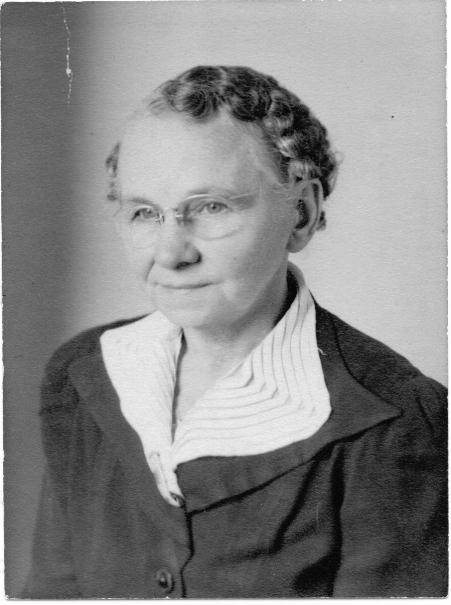
John [figure 16] resembled his father in many respects, not as tall, but a lot in manner. He married Ellen Murdock who had come out from Scotland. A fine girl. Quite an artist, I have one of her oil paintings and I think it is very good. She died of cancer a few years ago. Since then John has lived alone in the house. On a visit there recently the place was spic and span.
There is a daughter Betty Jean in B.C. John was out there last Christmas (1992).
Ralph Seymour (1920-1958)
Born in Canning, May 1920. I can’t tell you much about Ralph. He joined the army (1940?). He would be about 9 years old when I first left home. I know he got to be a lieutenant (artillery). After the war he ran a small grocery store. He never came back home to visit. He died just shortly after Mother in 1958.
He married Phyllis Sweetman. There were 3 children; Peter, Jean and Gerald, twins [figure 17]. Fred and Kay went to visit the family shortly after Ralph’s death.
Last but not least:
Marion Levina (1921-2000)
Born in Canning, September 6, 1921 [figure 18]. So you were only about 18 months old when your father died.
I’m sure you can write more accurate notes than I can. I do know life has not been all beer and skittles. But you have a lot of spunk and you can thank your Mother for that.
So that’s the Smith clan.
I’d like to add one thing – Arch’s son, Paul, the one in Pictou is, with his wife, keenly interested in family trees. They have been to the Archives in Halifax on occasion. I tried to get together with them while I was in Martin’s River but they could never find time – both work. But if you want more info you could contact Paul. I’m sure his Mother would forward any letter you write.
And now I’ll leave the family and try to relate a few happenings that may interest you.
Uncle Percy – Cape Blomidon.
One time Dad’s brother, Uncle Percy, was visiting us and Dad decided to take him for a Sunday drive. Mother and I went too. We went to Kingsport, Pereau, and ended up at Cape Blomidon. That is a dead end, or was then, except for a narrow steep dirt road that went up the mountain. Dad decided to go up. We got 3/4 of the way up and could go no further. The car began to move downhill. Dad put the brakes on – to no avail. The car began to go backwards a little faster, and a little faster. Dad started zig-zagging the car, going from one side of the road to the other, sometimes nearly going into the ditch which in places was quite deep. We were all scared. I glanced at Uncle Percy – he was scared stiff. Anyway Dad kept zig-zagging and finally got to the bottom of the hill. Everything turned out just fine.
Alf Dorman
One Sunday Alf Dorman who lived on the dike road on the way to Hillaton, just past the little bridge, came to visit Dad. And he brought with him what we call a valise – it was filled with phonograph records, the blue celluloid type. Dad had an Edison phonograph (talking machine) – a table model, wind-up type.
So Alf Dorman opens his suitcase and they started playing records. I remember the name of two of the records, namely, ‘Uncle Josh Goes to Town’ and ‘Uncle Josh Buys an Automobile’. They (the records) were funny because both men did a lot of laughing. I don’t think I stayed for the whole show – I think it was after noon when Alf Dorman left.
Sir Frederick Borden’s Burial
This has nothing to do with your father but some things are important. When Sir Frederick Borden died they ran a special train with his remains to the graveyard. The service was held in the church on the corner by N. W. Eaton’s, the United Church I suppose. And as you know just in from the church was the school house [figure 19], and the railway crossing was right next. It was on that crossing where the train stood waiting. It was quite an attraction for us kids. To think that Sir F. W. rated a special train to carry him two miles to Hillaton station. Anyway it came to pass the body was put on the train and off it went – and me standing right beside the slow moving train could not resist the urge to jump on to the rear steps. And, of course, I had to stay there. The minute the train pulled into Hillaton station and slowed down enough I was off and hightailing it along the tracks for home.
Sir Frederick’s Reservoir
You could ask, did Dad ever give me a beating? Yes I am sorry to say he did. One Sunday afternoon Bob and I set out roaming. We went up the railway track and not far along we spied Sir Frederick’s reservoir. We decided to explore, so got over the fence and part way across a field. It was a small building – walls only about 2 feet high and a low peaked roof. There was a small door in the front end and we opened this door to look in. And what did we see? A big fat trout! Nothing would do but to go home and get my fishing pole – a new one – they called them ‘telescopic’. I returned with the pole and a couple of worms and proceeded to catch that fish. It was a pity really, the bait no sooner touched the water until that fish swallowed it. Bob got home ahead of me and apparently spread the good news. When I got to the door Dad was waiting for me and he gave me a pretty good tanning. Later it was explained to me that the trout was put in the reservoir for a purpose – to keep the water clean.
John Mullett
I must not forget John Mullett. He was of Dad’s time. He was the lamplighter in Canning. He would trudge up the street in the mornings with his little ladder cleaning the shades of the lamps and adding oil, then before darkness lighting each one. He was a well-educated man. In later days he was the janitor in the Bank – I used to talk with him. One time he lent me a book, ‘The Principles of Political Economy’ by John Stuart Mill – published 1894 – nearly 600 pages, two columns to a page. Dear John, he went off his rocker and they took him to Dartmouth for treatment. Is it any wonder. A man would have to be crazy to read that book. And I still have the book. When they took John away I offered to take over his job – $15 per month. It was not my line of work and I didn’t last long.
Electric Lights
A short time after the end of the first war they built a hydro plant in the Gaspereau Valley and in due course ran feed lines throughout the valley.[16]
Canning was among the first. When it came to wiring the houses it was pretty well everyone for himself. There were only two persons in town who professed to know how, and that was Ken Hennigar and Frank Northrup. Dad said he wouldn’t let Frank Northrup in the house, he would steal everything he could lay a hand on.
In the end Dad and Don and Frank wired our house (the big one). It was no big deal – it was all open wiring – you fastened insulators to the ceiling and ran the wires along them – where you wanted a light you connected some lamp cord to the big line and put a socket on it. Boy, the electric lights made a big difference to life.
A postscript: I had accumulated Liberty Stamps – a war time measure – $5 each; paste 10 of them on a folder and exchange for a $50 bond. I think I had 9 and gave them to Dad.
To Chester
I made two trips to Chester with Dad and Mother. The first we had Fred Northrup with us – he ran a candy store – it was between A. D. Payzant’s and next to Bessie Hennigar, milliner.
This first trip I’d say would be about 1913 – I was 6 or 7 years old. The car was a Ford touring – we had the top down. We started early, got to Kentville with no problems but going over the New Ross road was a bit more testing. In places the road was nigh impossible, and it seems we stopped at every brook to add water to the radiator. It was dark before we reached Chester, and Dad hung an oil lantern on the front of the car. We got to Uncle Ralph’s in the early evening. Dad spent most of the next day fixing up the car and the next day we made the return trip.
The second trip was a year or so later. By then Dad had another car, a MacKay, a bigger car – right-hand drive of course, the gear shift was on the running board or so it seems. That was an easier trip but still took hours. As you likely know the old Fords had 3 pedals, one to put it in gear, one to reverse, and one to brake. The MacKay was one of the first to have the more modern stick gear-shift.
As you can imagine it was a treat for Mother to get to Chester, Her sister, Aunt Hattie lived there – she was Owen Zinck’s wife. He ran a shoe store, repaired and sold shoes. A nice man. Aunt Hattie was a fairly big woman, pleasant and out-going. They had kids, of course, and they turned out very well. One was a member of the NS legislature, one a doctor, and there were daughters.
Then there was Mother’s brother, Uncle Roy – he lived on the old homestead. They had but one child, a daughter. I forget his wife’s name but I recall one visit there when she kept me looking as she turned page after page of snapshots. It was real boring then but would be a real treasure now.
The Woodpile
As kids our favourite swimming hole was the ‘Red Bank’, an outcropping of sandstone on an otherwise muddy river. It was a popular spot, at times 8 to 10 of us kids there, all in our pre-teens. It was about a mile walk from town, across the lower dike road (by the Armory) then across fields. No one owned bathing trunks, likely all went barefooted. We passed many pleasant hours there.
One day with nothing else to do my brother, Bob, and I walked the 1/4 mile or so to George Holt’s. He had a farm and was very successful. We were standing in the barnyard just looking around when George Holt came out of the house. He bid us a pleasant “good day”. I guess, then, his wheels started to turn – there was a pile of wood nearby and he offered us $5 if we would cast it into the woodshed and pile it up. That was big money. We judged it to be about one weeks work. So we took on the job.
What a job. Day after day we walked over to George Holt’s. The more wood we carried the bigger the pile grew. Mother made lunches, often a cold boiled egg and bread. Of course we took time off for a swim, often a long one.
School started, the weather grew colder, and the job wasn’t finished. Somewhere along the way Dad got interested and spoke to George Holt, more or less accusing him of adding more wood to the pile from time to time. As a result George paid us the $5. By the time we paid some of our casual helpers we were not rich.
We learned later that it was not easy to outsmart the man.
And I think it was the next Fall I got a job with him picking up potatoes (10¢ a barrel). One day we were working in a 5-acre field – we were near the end, the field was dotted with full barrels of potatoes. A potato buyer, or Speculator as they were called, came onto the field and offered George $5 per barrel for the whole crop. George accepted the offer. Later he was heard to say, “Yes, the price may go to $10 in a (over) [the quotation is incomplete because the back of this page in Dad’s original letter was not photocopied]
Starr Eaton’s Window
Starr Eaton was our next door neighbour when we lived in the small house. He operated a candy, etc. store which would then be nearly opposite the monument. Instead of a large plate-glass window his store front consisted of a number of smaller panes, each about say 12 inches by 24 inches. I was only a gaffer at the time and I guess I got down town and I was staring into the window at something and I guess I pressed my head too hard against the glass and it broke. I left the scene of the crime – in haste.
The next day, or so, Dad took me by my hand and said we were going down to Mr. Eaton’s store and apologize for breaking his window. It makes me feel good to think of my father taking me by the hand. Parental love. And yet there is another angle, maybe he took my hand in case I should decide I wanted no part of an apology. But we got there and Mr. Eaton was very gracious – didn’t hit me or anything. In fact he gave me two red candy cherries joined by the twigs they grew on.
Mrs. Starr Eaton was a fine person. We visited her on our wedding trip in 1937. She gave Florrie a set of 6 (or 8?) pearl-handled butter knives in a lined case. And she gave me an oil painting, her own work, framed, about 8 inches wide and 14 inches long.
Jim Lynk et al
The Lynks were very good friends of Mother and Dad. They lived out near the foot of the mountain. He was caretaker, gardener, etc., at the Borden estate in town. He was as homely as a hedge fence but 100% gold. I don’t remember his wife’s appearance. We used to visit them on Sundays. They had a parcel of kids. In later years one of the daughters stayed with Mother awhile.
It reveals something of Dad’s makeup to think he hit it off with the likes of Jim Lynk, Alf Dorman, and likely others while seeming to avoid the big wigs. To name a few of Dad’s contemporaries: Bobby North (town clerk), Cliff Meek (farmer, town council, and Liberal strongman), Halle Bigelow (wharf builder, Liberal strongman), Sam Chipman (builder, Tory strongman), N.W. Eaton (merchant), Jimmy Kennedy (merchant), Arch Lockwood (feed store), Bill Young (machinery) a friend of Dad’s, Mrs. Young (nee Bessie Paton) was my godmother, John Robarts (worker in the axe factory), Melvin brothers (two – cooper shop and mill). I must not forget Dr. John Miller who brought us Smith kids into the world. And A. D. Payzant who owned the big ‘Ladies & Men’s Wear’ and Dry Goods store, opposite the Covert Block. A big and successful business in its day. They lived in a big house up next to Dr. Miller’s.
I went once to the house for his son, Bill’s birthday party. Bill had got a magic lantern for his birthday and the highlight was to be the showing of slides. It was something new and different. The light used was merely a small oil lamp with a small glass shade. I was invited to have a look at it and during my examination I inadvertently knocked the shade off its bracket, it fell on the floor – and broke. So no magic lantern show. That’s when I learned why they don’t ask skunks to garden parties.
A. D. had the first radio in town. I went up one night about dusk and looked in through a window and there was A. D. sitting in his chair with a pair of earphones on his head. Boy that was something. I learned later that it was a Northern Electric make, used dry cell batteries. A year or so later I sent away for parts and built a set – just a single tube – it worked. I mind running a 100 foot aerial wire from the back end of the house out to a tree in Joe Northrup’s orchard.
Canning Fire 1912
One of the big events in Canning’s history was the big fire in the Brick Block in 1912. I would be 5 years old at the time – you were not yet born. A. S. Burgess owned the building, parts of it rented. The fire broke out on a Sunday afternoon – I think about mid-year.[17]
I was there. The firemen tried to smash in one of the plate-glass windows in order to get at the flames. That failed and then they tried heaving enamel chamber pots at the glass. That was at one end where the hardware store was located. They must have got the fire under control because the building is still there, in fact a second storey has been added. They were suspicious of the fire’s origin.
It did some good. The looters were on hand. I remember Don (maybe Dad also) buried cigarettes in the sand on top of the furnace. The Kentville police came the next day to round up any looters. I don’t imagine they would get many.
Bill Irving’s Store (Covert Block)
Another fire, or near one, happened in Bill Irving’s shoe repair store. Bill spent more time making violins than he did mending shoes. One day a pot of glue he was melting on the stove boiled over and went up in flames. Just then H. H. Wickwire, a big-shot lawyer from Kentville, was driving through town in a big Cadillac. He saw the blaze, stopped his car, unhooked a fire-extinguisher from the running-board of the car, got as closs as he could to the fire and sprayed the flames. A remarkable feat. It quelled the flame to the point where some men were able to finish the job.
Then Mr. Wickwire got in his car and went on his way to his cottage in Kingsport.[18]
Sam Chipman
I must tell you about Sam Chipman. Both he and Dad belonged to the Masonic Lodge. When Dad was ill the last time Sam came to sit with him through the night so Mother could get some rest – if she did.
Anyway some years later when I worked for Sam in his hardware store he was telling me about this and the awful suffering he caused himself and didn’t draw a good breath until he finally confessed to the doctor.
It seems that during this particular night as Sam sat in the chair by the bed Dad complained about being cold. Sam kept adding blankets – but to no avail. Sam told me that he always carried a flask of rum on him when he went to sit. So at this point he got out his rum and gave Dad a couple of small swallows. That, said Sam, seemed to cure his chills. But Dad didn’t last much longer and Sam figured that giving Dad the rum had killed him.
Sam says he stewed about that for a long time until one day he told Dr. Chute the story. Dr. Chute told him it was the best thing he could do. [19]
[The Yacht]
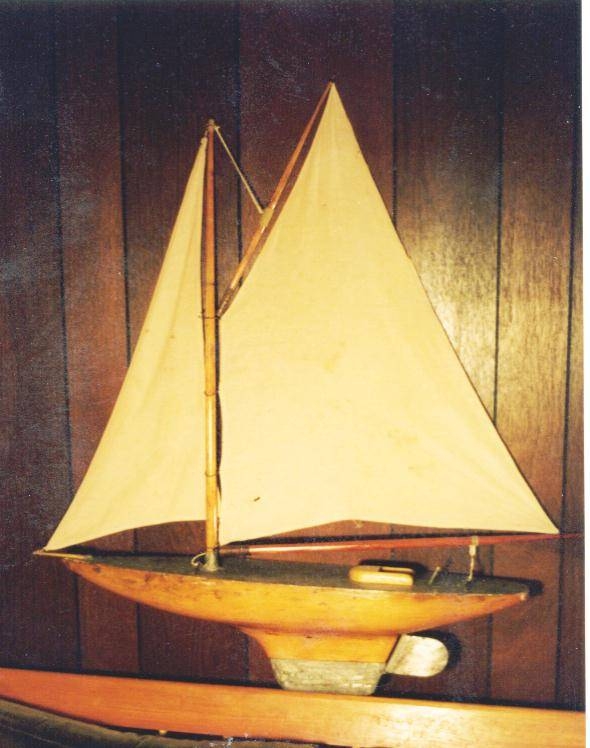
It is about time I started winding down but first I must tell you about the yacht. When Dad worked in Halifax and was installing a toilet in a house he had to cut a piece out of a floor beam. It was pine. Dad used that block of pine to shape a yacht hull (about 24″ long) and molded the lead keel. As brother Bob told the story it was a very attractive boat. Then one winter when Dad went to Kentville to work for T. P. Calkin Ltd. and Uncle Ralph came from Chester to look after Dad’s business he decide to do something about the yacht which by then was in poor shape. He removed the original wooden deck and replaced it with a tin one. As Bob said he ruined it. Anyway some years later I came across the boat, no mast, no nothing. So I set out to fix it up. I had to shave down a broom handle to make the mast – with a jack-knife – hard wood – Mother sewed new sails [figure 20]. I painted it with the only colour available (light blue and white) and I sailed that boat a few times in the Canning river at full tide, sometimes up the little river. [The hull is refinished to its natural pine base].
I had that boat with me in Martin’s River and when I moved I gave it to my son, Peter, for his son, Todd.
[In Conclusion]
It seems to me Uncle Ralph spent a lot of time working with Dad. Enough, I guess, that he set up business in Chester and later carried on by his son, Walter. I know we used to get canned lobster from Chester in tins made by Uncle Ralph. And I mind once him shipping a 1 gallon tin of scallops, which when opened I had to take door to door (pre-ordered). Like at Mrs. Joe Northrup’s – she had ordered 6 I think. She just put her fingers in the tin of water and pulled the scallops out. They were 2¢ a piece if I remember correctly.
Not long after Dad died Mother decided she had to give up the big house. Whether she owned it, rented it, mortgaged it, or whatever, I know not. Scott Blenkhorn, he ran the Axe Factory, he apparently came to Mother’s rescue and sold her that dump of a place up by Barry Baxter’s. It must have been quite a come-down for Mother – yet she never complained about it except she did insist on a decent set of stairs to the upper floor, and a fireplace (grate) in the living room, etc. For money she got a mortgage of $250 From John Sanford. Fred and I made regular payments on the mortgage until it was paid off. I think Mother was happy in that house – at least contented.
When I got transferred in the Bank from Canning to Halifax I bought myself a new suit of clothes (tweed), a hat, shoes, etc. I was to leave on the 1:00 o’clock train for Kentville and the night before I was invited to a stag party up at Lewis Clark’s in (or before) Sheffield Mills. It was quite a party – lobster, rum, good company. However when we started for home, on foot, it was raining, and it kept raining. It was a good two-mile walk so by the time I got home I was dripping wet and as I thought, my new suit likely ruined. When I finally got home I crawled into bed. I came to about 10:30 the next morning and realized I was in a bad way – wet, wrinkled clothes, etc.
As usual Mother came to the rescue. I haven’t a doubt in the world but that she heard me staggering in the night before and knew too that my clothes would be in a mess. God Bless her, she was up in the morning working on my suit, my hat, even my shoes. And she did a remarkable job.
Another little thing about Mother. When I went to Acadia I hadn’t two cents to spare nor could I get back to Canning at all often. Mother wrote me religiously, she would send me a box of cookies, and sometimes tucked in the box was a $2 bill.
In closing I can say that we were blessed with good parents, not the richest, not the greatest in the scheme of things, but they passed on to us kids an awful lot of good and necessary qualities.
S. C. (Peter) Smith
Alliston, Ont.
August 29, 1993
[While going through my father’s books after his passing in November 2000, I found a small booklet entitled, “Historical Sketch of the Parish of Cornwallis, Nova Scotia, 1760-1985”. It contains a brief history of the St. John’s [Parish] Anglican Church in Canning. This 3rd printing was compiled for the 225th Anniversary of the Parish . . the 1st was for the 150th, and the 2nd for the 200th Anniversaries, respectively. Dad included a few brief notes in the booklet. On page 2 showing a photograph of the Church and surrounding cemetery, his note is, “Picture of Church. That’s where my parents are buried”. He noted page 27, where it states,
“In 1961, the Corporation of St. John Cornwallis received Dominion of Canada Bonds from the heirs of Mr. and Mrs. W.D.F. Smith. The interest from this bequest is to be used for the support of St. Michael and All Angels’ Church in Canning in memory of Mr. and Mrs. Smith.”
Dad added his own comment; “re Bequest Mr & Mrs WDF S. Mother died in 1958, Arch was looking after things and at my suggestion the proceeds of the estate (not large) was given to the church”. He also noted page 32, where it states,
“The flood-light over the altar is in memory of Mrs. W.D.F. Smith and the Bible on the Reading Desk is in memory of Mr. W.D.F. Smith both presented by their family.”
I was not aware of these bequests, and I suspect the same can be said about most of the other W.D.F Smith grandchildren. I thought it was important to append to my father’s letter, albiet over 7 years later.]
Back to Smith and Westcott Home
[1]. George MacLaren, Antique Furniture by Nova Scotian Craftsmen, Ryerson Press (Toronto) 1961. Appendix A in this book lists over 400 individuals who worked as cabinetmakers in Nova Scotia between 1750 and 1961. Of these, six are Smiths, and one is identified as “Smith, David D., 162 Albemarle St., Halifax, Halifax Co., 1864-1869”. One might reasonably assume that this is a reference to David Duncan Smith. MacLaren’s source is the Hutchison’s and MacAlpine’s Directories of Halifax for those years. He is listed through to 1878, and during that time lived on Pleasant St., Brunswick St., Hurd’s Lane, Creighton St., and Argyle St.
[2]. Although the footstone, shown in figure 1, is inscribed ‘1853’ as the year of birth of W. D. F. Smith, a copy of his birth certificate [figure 2] cites the year as 1855. This is located in Camp Hill Cemetery, site “Division 6D lot 46”.
[3]. According to the footstone shown in figure 1, Wm. McD. Smith was born in 1881 and died in 1910.
[4]. According to Old Timers, a fire caused considerable damage to Starr Eaton’s house and it was subsequently demolished. Another small cottage was moved there.
[5]. Old Timers reports that Harris, a merchant, built the house in 1875. It was sold to a woman in Halifax, then to Alice Newcomb. “Mr. W. D. F. Smith owned the [little] house but needed a larger house for his family, so he traded with the Newcombs living in the R. D. G. Harris house.”
[6]. Old Timers reports: “He [R. D. G. Harris] had a daughter Lucy who died in 1938 at the age of 50.”
[7]. Old Timers reports that the ‘block’ was built by Harry Martin in 1896. Presumably it was named after the Hon. Dr. Covert (1879-1922) who purchased the ‘block’ at some later date.
[8]. As interpretted from Old Timers, this was a “suitable fire proof” brick structure built by A. S. Burgess soon after the 1912 fire destroyed his prior premises.
[9]. According to Old Timers, the engineer would not drive the engine onto the trestle but did uncouple and shunt two flat cars onto it which were then pulled back by hand. This was the only freight moved along the line.
[10]. Old Timers reports that the building was ” . . built by W. D. F. Smith, for a plumbing shop. Then bought by Fred Jodrie, who ran it as a restaurant and ice-cream parlour. It was sold to Cory O’Dell’s wife’s father [Tom Wood?], who ran it as a restaurant. It was sold to Laurie Manuel, then to Ian Ross . . . It is now Mike Knight’s Law Office (Aug. 2. 1976).”
[11]. Old Timers reports: “At one time the Commissioners hired Mr. McKay to drill a well east and close to the reservoir. When he thought he had plenty of water, he sent for the [Water] Commissioners to check it. They took Mr. Smith, the plumber, and Fred Jodrie, his helper, with them. They had two 45 gal. barrels, and one was put under Mr. Smith’s pump, it took 15 seconds to fill the barrel with water. Mr. Smith thought it was adequate, but the Commissioners decided the well should be drilled deeper. Mr. McKay was being paid so much per foot so down he went – called the Commissioners for a second test – but had lost the water. He left Canning with $2200, and all Canning had was a hole in the ground and the casing.”
[12]. Old Timers reports: “Sir Frederick Borden bought the Mitchell farm about 1902, and moved the barn across the road, and had it made into the Anglican Church (figure 12).”
[13]. Hymn 734 in Church of England Hymn Book has no title but its first line reads, “Shall we gather at the river”.
[14]. They bought, lived in, and later sold an original Cape Cod house outside Lunenburg, on the Second Peninsula, before the Townson Street house. In 1964 Uncle Bob and Aunt Viola gave us a Johnny Young rocking chair from their Cape Cod house. Johnny Young (Jung) (mid 1800’s) was a well-known cabinet-maker who lived at Young’s Landing, Second Peninsula, Lunenburg Co. We still have the chair, still in its original condition.
[15]. A few years after his retirement, Mom and Dad sold their home in Richmond Hill, Ontario and returned to Nova Scotia where they had a house built in Martin’s River over-looking the cove. The move afforded them the opportunity to re-kindle relationships with friends and relatives in Nova Scotia. They moved back to Ontario in 1992, purchasing a new home just outside Alliston.
[16]. Old Timers reports: “About 1921 Canning Water Commissioners erected 300 poles for a line to Port Williams. That way they could get Gaspereau River electricity.”
[17]. As interpretted fromOld Timers, during renovations to this building in later years a metal box was found imbedded in the concrete foundation. It was put there by A. S. Burgess when he re-built. Part of Burgess’ letter states, “On the 23rd of June 1912, the town of Canning was destroyed by a disasterous fire. The fire was first noticed by the Capt. of the steamer Brunswick as she was about to dock on Sun.a.m. about 6 o’clock.”
[18]. According to Old Timers, the Hon. H. H. Wickwire was Nova Scotia’s first Minister of Highways.
[19]. Old Timers reports: “Dr. Miller was joined in partnership with Dr. Chute who married his daughter, Minnie.”
[]Figure 1][Figure 1A]: Footstone in Camp Hill Cemetery, Halifax.

[Figure 2][Firgure 2A]: Birth Certificate of William Donald Fraser Smith (1855 – 1892)
[Figure 3]: William Donald Fraser Smith (1879 – 1923)
[Figure 4]: Aunt Tillie and Robert Smith
[Figure 5]: The little house, Canning, NS.
[Figure 6]: Hanging Kerosene Lamp

[Figure 7]: The big house, Canning, NS.
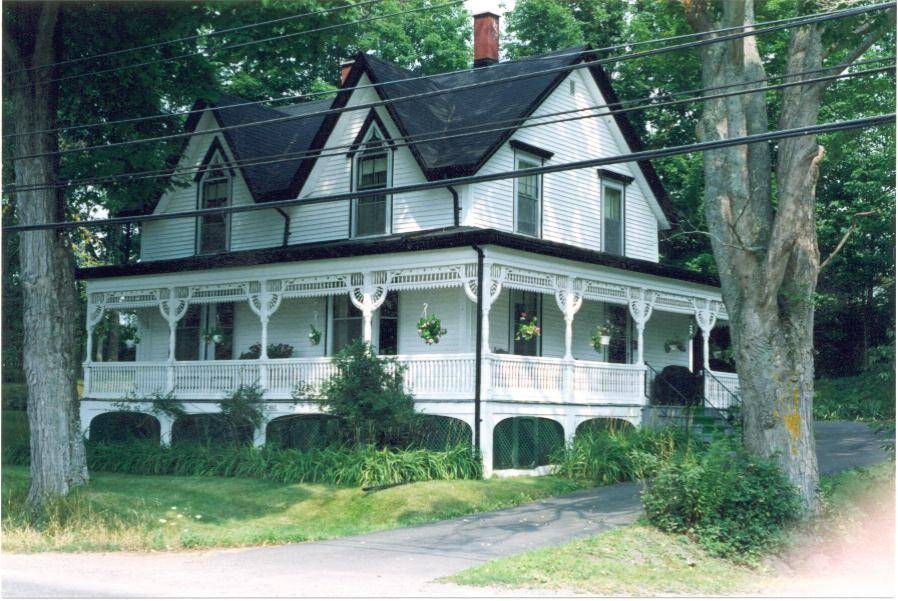
[Figure 8]: The little house is visible to the right of the big house.

[Figure 9]: Candle stick
[Figure 10]: Uncle Ralph (brother of Maud Smith)
[Figure 11]: Maud Smith (1881 – 1958)
[Figure 12]: Anglican Church, Canning, NS.
[Figure 13]: The Smith Family
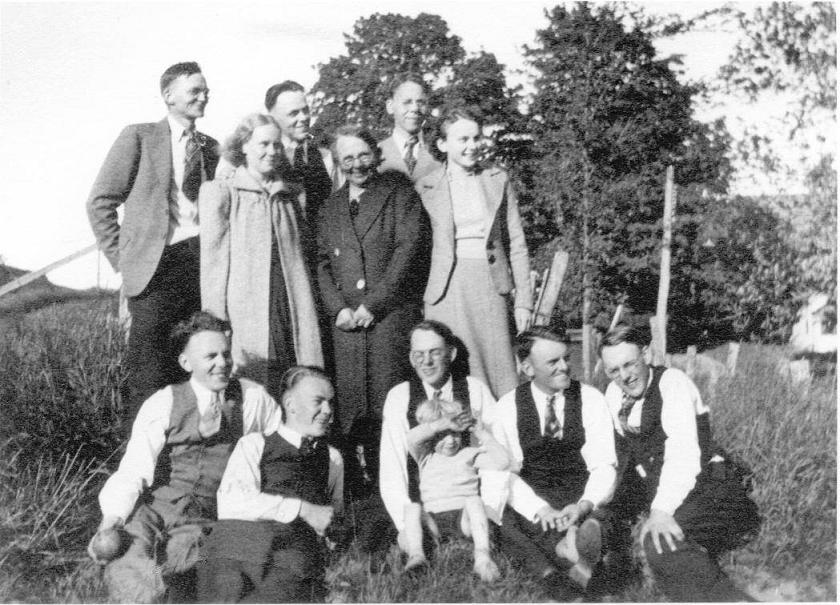
Back row (left to right): Don, Theresa, John, Mother, Seldon, Mario
Front row (left to right): Fred, Ralph, Bob (and Bobby), Archie, Ed
[Figure 14]: Donald Fraser with Mother and Father ( ~1902)


[Figure 15]: Seldon Clare Smith’s business card
[Figure 16]: John Wallace Smith
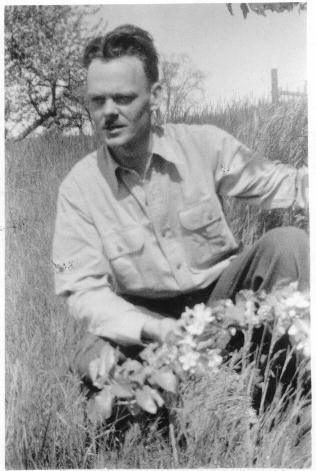
[Figure 17]: Phyllis and Ralph Smith with Jean, Gerald and Peter
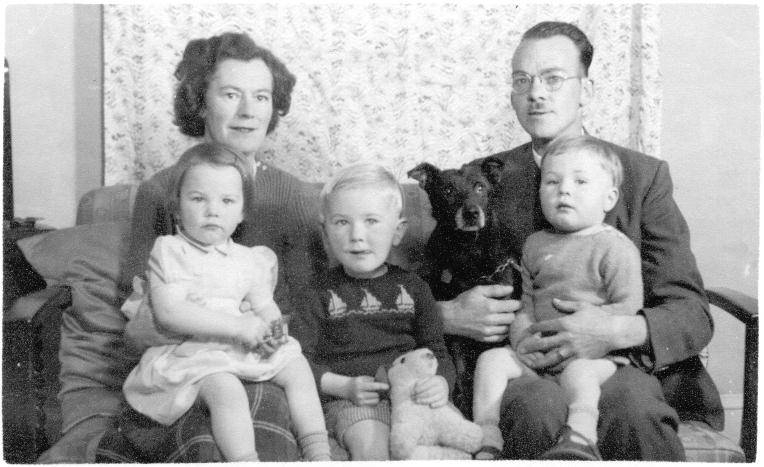
[Figure 18]: Marion and Seldon, Winnipeg, 1947
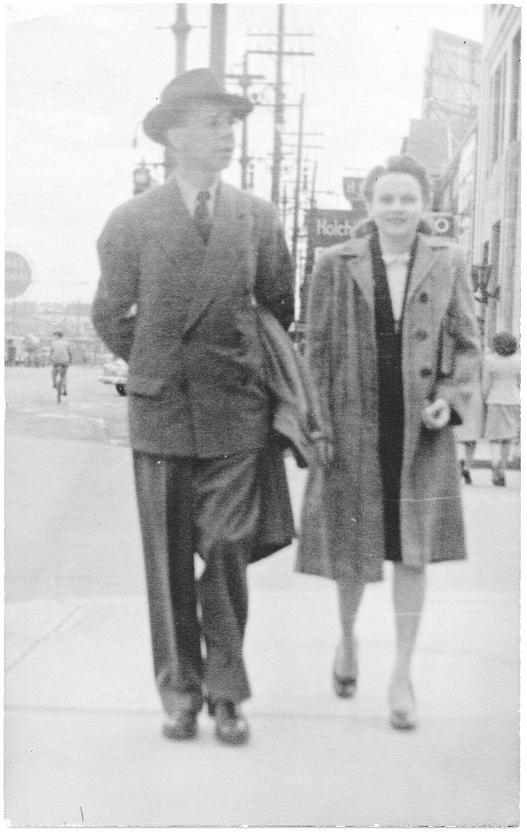
[Figure 19]: School House, Canning, NS.
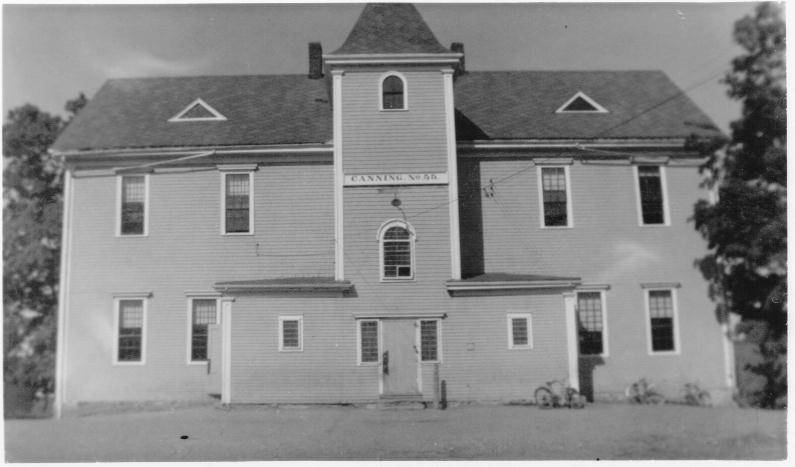
[Figure 20]: The yacht
 Smith and Westcott